
Questions on origin
(& why sometimes there are in fact bad questions)

‘There are no stupid questions’ – a phrase I’ve said so many times, in education contexts, tourism contexts, when teaching tea, when tutoring linguistics, always. Sometimes people feel really insecure about asking questions – they think that they should know the answer already, or they don’t quite know how to phrase the question. I think part of my job is to make people comfortable with navigating these moments, and to not feel judged for asking questions.
And I’ve encountered some wild questions in my time as a tour guide in both the UK and Japan. Other guides have shared similar; tourism is a context rich in cultural clashes, misunderstandings, and mistaken assumptions.
So, I do believe that there are no stupid questions, but sometimes there are… the wrong questions. Questions that are really assumptions, or questions that hold implications which don’t actually apply.
One category of question that I get a lot, working in matcha across different countries and in different parts of the tea industry, is about matcha and origin. Specifically, single-origin matcha. Is it good? What’s the best single-origin matcha? How are they different? What’s the flavour profile of each origin? How do you know if it’s single origin?
There’s an underlying assumption in all of these questions: that ‘single origin’ means the same thing in matcha as it does in other artisan markets.
Matcha as a product on the Western market is often considered in similar terms as other ‘artisanal’ or ‘heritage’ food products – putting these terms in quotes as they are also somewhat challenging to define without disentangling several other assumptions. Perhaps we’ll do that in a future article.
But part of the worldview this all exists in expects vertical integration and direct-to-consumer relationships, because that’s what has come to be associated with artisanal craft in this frame of reference. Venues like farmer’s markets exist to connect farmers directly with their customers, bypassing the supermarket middleman that skims off profits and allowing customers access to quality, fresh produce that’s in season. Craft markets connect people with artists making unique work who may not have the premises or funds for a brick-and-mortar shop. This kind of connectivity supports livelihoods for so many people who would otherwise not be able to practice their craft in an economic system that’s set up for scale and conglomeration rather than quality and independence.
So when we bring this worldview to matcha, it makes sense to ask questions about origin and makers, because those are the sorts of questions we’d ask about any other artisanal product. But matcha doesn’t exist in the same context. It comes from a different part of the world, and its production is much more complex than most consumers realise.
Matcha isn’t produced and sold by ‘matcha farmers’ the way that many Western-facing brands position it to be. Farm-direct sourcing is actually incredibly uncommon in tea in Japan, because most tea (including matcha) is processed in stages with different craftspeople responsible for each stage.
In most cases, farmers cultivate and harvest the tea leaves. Tencha producers take the harvested leaves and process it into tencha. Wholesalers and blending houses blend tencha and organise for its milling into matcha. At each stage, the responsible party produces what is for them the finished product. Only at the end of the chain is that product available to consumers as matcha. For a more in-depth look at this supply chain, this 2024 article from Tea Nursery provides an excellent starting point.
This system is a result of historical practice as much as specialism in craft. Matcha production is so highly specialised, both in terms of its cultivation practices and the machinery required to process it, that it made more sense for different people to specialise in different stages of the process. Over the last several hundred years, innovations like shading and tea harvesting and processing machinery have made it possible to produce at scales not feasible for single farmers. There has never really been the impetus to vertically integrate production, because in this context it just makes more sense for each stage to be treated as the specialism it is, and to be handled by the people most equipped to do it.
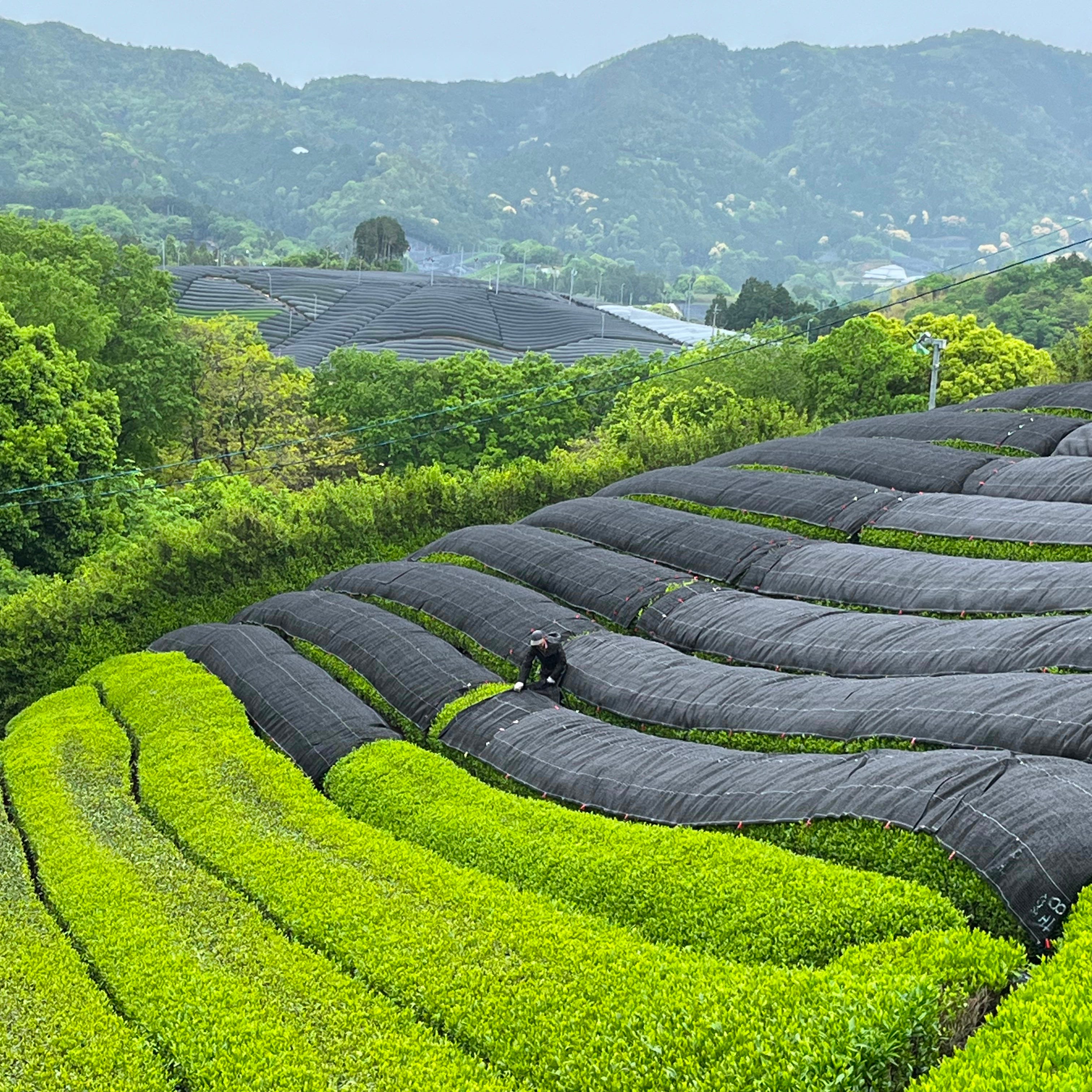
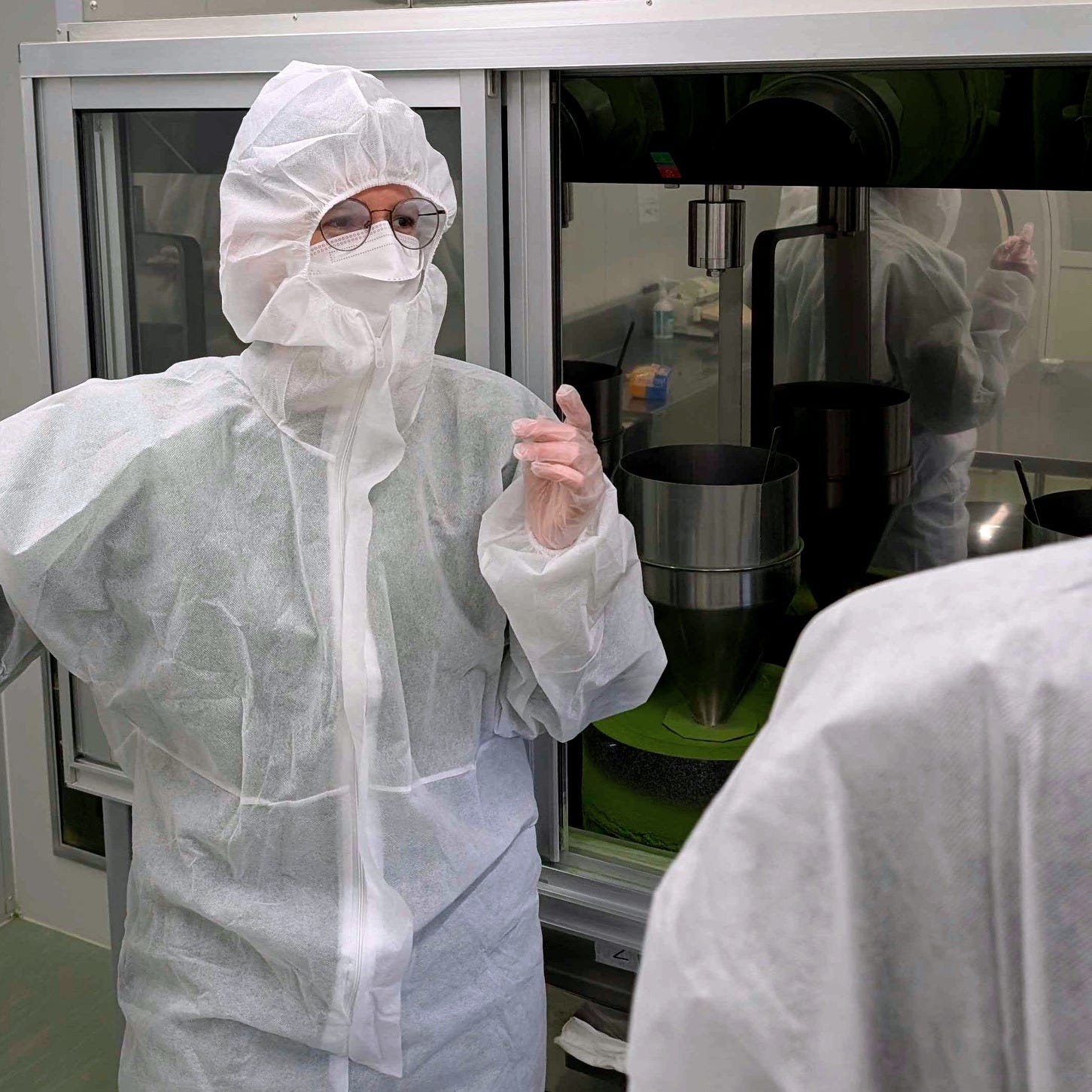
Some glimpses into tencha processing; footage taken by me at a tencha processing factory in Wazuka, Kyoto, Japan in 2023.
So while in Western artisan markets, we’ve seen a move towards smaller production, hands-on craft, and transparency in direct-to-consumer relationships, the same values of craftsmanship and quality production in Japan have resulted in a supply chain for matcha which has many highly specialised stages and is extremely opaque, all in order to produce quality matcha at a scale that (until recently) met the demand.
All of this context is why questions about ‘single-origin’ matcha feel a bit misplaced to me. Big names like Uji or Kagoshima or Nishio refer to regions of Japan that produce matcha, but when production happens in stages, those stages can take place across different regions. Which one is the origin then? This excellent ongoing series from the Specialty Matcha Podcast tackles the issue with regard to Uji specifically. ‘Uji’ as a name in matcha refers more to a processing style and flavour tendency than to the geographical area where the tea was grown and harvested. Does that count in our understanding of ‘origin’?
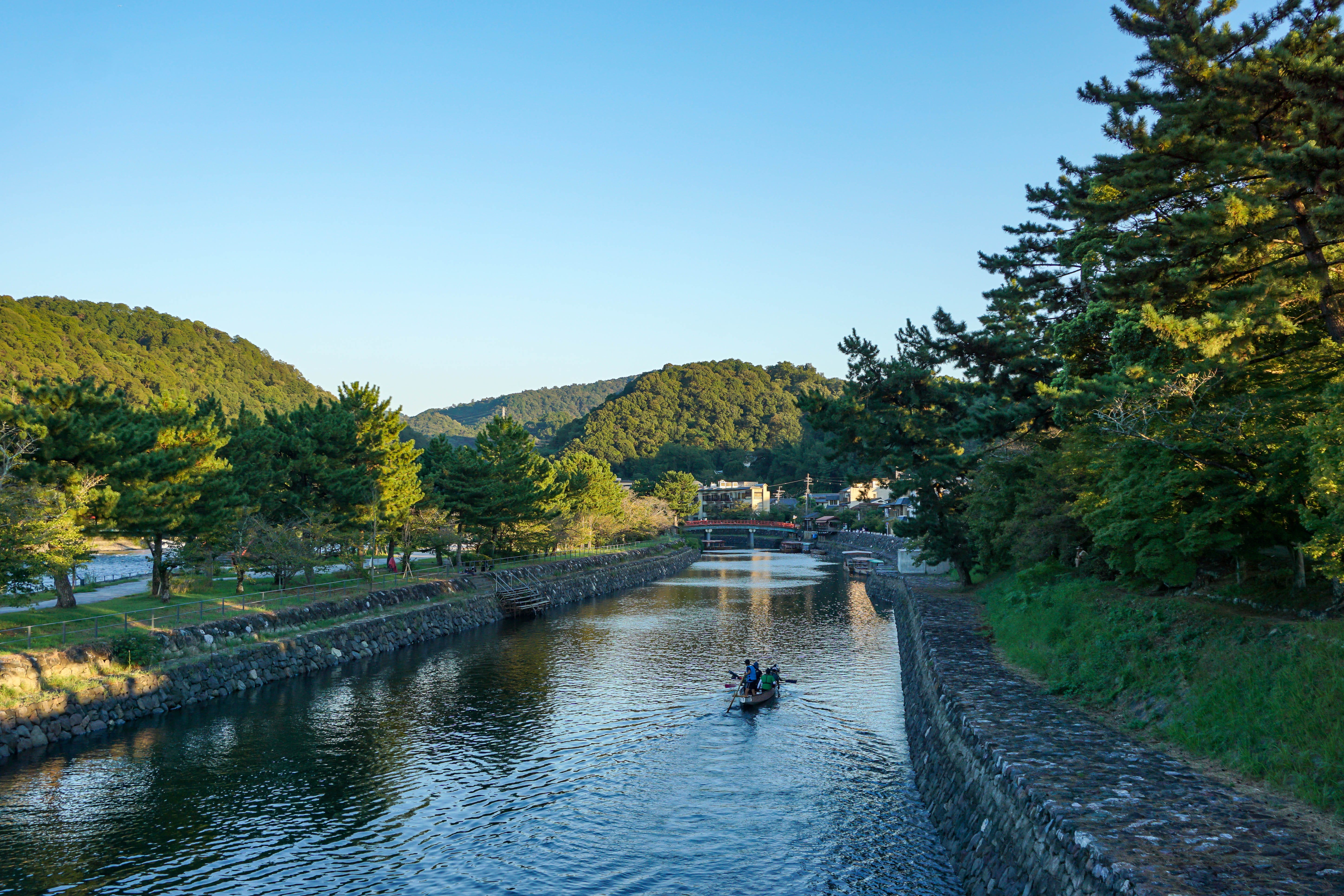
But this is all very complex to explain, and even more difficult to convey in a business context - especially when the aesthetic imagery customers are looking for is location-specific rather than processing-oriented (see the tea fields of Wazuka, above). So still many Western-facing businesses position matcha in a way that makes intuitive sense to their customers, using a mental model that’s easy to understand – but that just isn’t fit for purpose. And so the questions keep coming.
I’ve encountered them with customers as a matcha barista in a café in the UK, with students as a tutor for the UK Tea Academy, with clients as a tour guide covering heritage food and drink, with freelance clients, and now with tourists in my job on a tea farm in Japan. At some point, I become aware that we are using the same words to have two very different conversations.
It’s an easier thing for me to catch than for most, because I’ve worked across these different environments, and part of my job has always been to identify and navigate these differences myself. And I’ve found a sense of personal calling in synthesising this kind of understanding, and providing the education and context that people need to make sense of (and perhaps cross) this divide also. That’s part of my purpose in writing this newsletter, actually.
This is all especially interesting in a tourism setting. When people are traveling, on holiday, or otherwise in a new environment, they tend to be somewhat more open. It’s normal, when you’re in a new country, to realise that your approach the world maybe isn’t the only one out there. We call this culture shock sometimes, but on the flip side it can manifest as an openness to new concepts or frames of reference that are harder to access at home.
So while tourism perhaps isn’t always an intentionally educational environment per se, it can actually be a very productive learning opportunity. I’ve found that folks asking origin questions in a tourism context tend to be able to cope with more complex answers, and to ask follow-up questions in which they do start to interrogate the blind spots and assumptions in their initial question.
Of course, as the person asking these questions, it’s hard to realise these blind spots for what they are. Being in a new place with a different frame of reference can help illuminate them, but I think people working in the tea and matcha industries also have a responsibility to meet customers in the middle – to help identify and clarify these blind spots, rather than blindly reinforcing assumptions.
I’d love to say that consumers shouldn’t expect terms like ‘single origin’ to mean the same thing for matcha as for other products they’re used to. But I think it’s still too early for that – for most customers, the frame of reference is still set by companies that aren’t willing to develop more nuanced terminology. Particularly with how much of a trend matcha has been in the last two years, it’s almost essential from a business perspective not to educate your audience, because that would compromise the trend. Trends depend on speed, virality, and superficiality – none of which is conducive to slowing down to interrogate our underlying assumptions and ideas about how the world works.
So that leaves me with two calls to action, one for players in the Western-facing matcha market, and one for interested consumers.
For matcha drinkers & consumers: Consider the cultural context and background that your curiosity comes from. Use questions to find and challenge your own blind spots, not to affirm your existing worldview.
For businesses in the industry: Consider how your branding, marketing, product descriptions, and everything else engage with frames of reference that aren’t fit for purpose for your product. And if you’re taking the easy route, at least consider why.
As always, these points apply beyond matcha, and beyond tea. These kinds of assumptions and misunderstandings tend to happen when something with cultural or historical importance becomes a product in a market divorced of its heritage value.
There are no stupid questions… but there are assumptions inherent in all questions. My challenge to you, whoever you are and whatever your interests, is to take a step back when you encounter a question. Be it a question you are asking, or a question someone else asks you. Take a step back, and consider – what does this question already assume to be true? What is this question missing? Or best of all: what is the question underneath this question?
Often, I find those questions to be the most rewarding and challenging ones.